

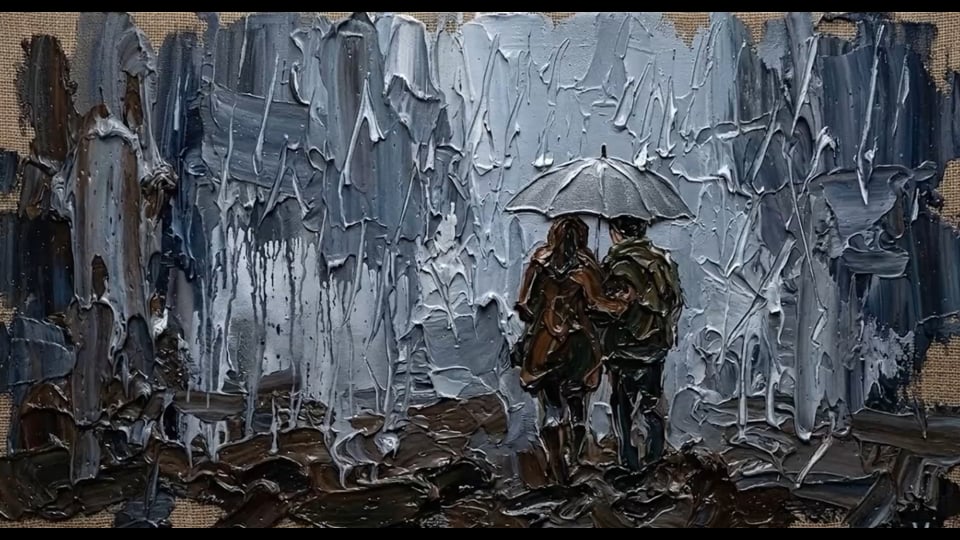
Language describes fundamental human capacity for symbolic communication the ability to create meaning through signs and systems that stand for something beyond themselves. Throughout history, different artistic disciplines have developed distinctive languages: the language of painting through color and composition, the language of sculpture through three-dimensional form and space, the language of cinema through editing and camera movement.
Establishing Visual Language
Jean Boutin practice represents development of new artistic language one appropriate to moving fine art, combining concerns of traditional painting with expressive possibilities of temporal media. Like all meaningful artistic languages, this new language possesses characteristic vocabulary, grammar, and syntax.
The vocabulary includes elements recognizable from painting practice: color relationships, compositional strategies, textural qualities. Yet it expands beyond static media to include temporal elements: rhythms of motion, pacing of change, patterns of development across time.
Grammar the rules for combining elements meaningfully operates according to principles distinct from either traditional painting or conventional cinema. Boutin’s language requires that motion serve formal and conceptual purposes comparable to brushstroke or color choice in painting. Motion cannot simply happen; it must function meaningfully within overall artistic statement.
Syntax and Compositional Development
Syntax in Boutin’s visual language involves sequencing and pacing how elements appear and transform across time. His pieces typically establish visual themes, develop them with variation, and resolve them according to principles comparable to musical sonata form or literary narrative structure.
Yet unlike cinema, his work doesn’t employ plot-driven syntax. Instead, visual and formal relationships develop and transform. Compositions that appear static early in pieces gradually reveal movement; elements that seem separate gradually coalesce; colors that read one way shift meaning as accompanying forms transform.
This requires viewers to develop literacy in this new language to learn how to read temporal development in formal terms rather than narrative ones. Like learning any new language, this takes sustained attention and repeated engagement.
Vocabulary of Motion
The study of motion itself becomes essential vocabulary in Boutin’s language. Different motion patterns carry different meanings: jerky motion suggests disruption or resistance; smooth motion implies ease; accelerating motion conveys intensity increasing.
He frequently employs motion patterns that repeat and vary, creating rhythmic structures recognizable as extensions of compositional principles from traditional painting. These rhythms function comparably to visual rhythm in painted compositions organizing space meaningfully and guiding viewer attention.
Color as Temporal Element
In traditional painting, color functions primarily as spatial element creating foreground/background relationships, establishing focal points, conveying mood. In Boutin’s work, color possesses temporal dimension.
Colors animate in particular ways: some shift gradually across pieces; others transform abruptly. Color relationships that feel balanced at one moment might shift meaning as surrounding forms transform. This temporal unfolding of color meaning expands what this element can communicate.
Form and Deformation
Traditional sculpture and painting typically emphasize stable form fixed shapes whose properties remain consistent. Boutin’s moving fine art introduces deformation form changing temporally while maintaining visual coherence.
These deforming shapes communicate ideas about transformation, instability, becoming, and flux. Yet they never completely break apart; visual coherence persists despite ongoing change. This balance between stability and transformation mirrors philosophical concerns central to his artistic vision.
Establishing Conventions
All successful artistic languages develop conventions widely understood meanings attached to particular elements. Photography established conventions about how light and shadow communicate; cinema established conventions about what editing patterns signify.
Boutin’s language remains relatively young, so conventions remain actively forming. Yet certain patterns repeat throughout his body of work, gradually establishing communicative meaning. Particular color palettes recur, establishing associations. Certain motion patterns appear consistently, acquiring semantic meaning through repetition.
As more viewers engage with his work, these conventions solidify. Future viewers will presumably understand his visual language more quickly than current viewers because the language itself becomes more established through wider exposure.
Grammar of Abstraction
Operating entirely through abstraction means Boutin cannot rely on representational meaning to communicate. Viewers cannot understand his pieces by identifying depicted objects or following narrative. Instead, meaning emerges purely through formal relationships and their temporal development.
This represents significant artistic challenge. Representational art benefits from immediate comprehensibility viewers understand that depicted forms represent specific things. Abstract art must establish meaning through form itself. Boutin’s success in creating emotionally resonant abstract work using his new language suggests the language functions effectively.
Emotional Syntax
Beyond formal grammar, Boutin’s language possesses emotional syntax recognizable patterns of feeling progression. His pieces typically establish emotional tones early through color, composition, and initial motion patterns. These tones develop and transform according to artistic intention.
Some pieces maintain consistent emotional register throughout; others shift dramatically. These shifts in emotional tone function comparably to key changes in music or tonal shifts in literature. They structure viewer experience temporally, creating arcs of emotional development.
Teaching and Transmission
One measure of a language’s viability involves whether it can be learned and transmitted. Boutin’s language is sufficiently sophisticated that other artists have begun learning and extending it. Works by other artists employing similar approaches moving fine art that prioritizes formal and compositional concerns over narrative suggest his language is proving communicatively viable.
Yet like any language, it requires sustained engagement to master. Viewers cannot casually comprehend pieces created in this language; they must commit attention, return for repeated viewing, and gradually develop literacy in the visual and temporal patterns the language employs.
Continuing Development
Artistic languages remain living systems that develop and evolve. Boutin’s language continues expanding as he creates new pieces, exploring possibilities he hasn’t yet fully developed. Other artists engaging with moving fine art contribute to this language’s evolution.
Future development will likely involve increasing sophistication and complexity. As viewers become more literate in the language, artists can employ more subtle and complex communicative strategies, assuming audiences will comprehend them.
Conclusion
Jean Boutin’s practice represents development of genuinely new artistic language one appropriate to moving fine art and combining concerns of traditional painting with expressive possibilities available through animation. By establishing vocabulary, grammar, and syntax suited to temporal visual expression, he created language capable of communicating emotion and meaning without relying on representation or narrative. Like all meaningful artistic languages, his language continues evolving as more artists and viewers engage with work created in this mode. The ongoing development of this language suggests that animated fine art possesses real communicative power and will likely become increasingly sophisticated as the field matures. Boutin’s fundamental contribution lies not in particular pieces but in establishing language through which such pieces can communicate meaningfully.

